
What Nobody Tells You About Being a Young Entrepreneur
7 myths about being a young entrepreneur, destroyed. Real talk on sacrifice, failure & why youth is your advantage from someone building at 23.

What Nobody Tells You About Being a Young Entrepreneur
I was 17 when my dad collapsed in our restaurant.
Brain hemorrhage. Coma. Doctors recommended letting him die because the surgery might turn him into a "nursing case." My mom decided to operate anyway. Eight months later, he woke up with half his body paralyzed and his speech center damaged.
From one day to the next, I went from being a gaming-addicted high school student who skipped classes to play until 3 AM to being the man of the house. The provider. The one who had to figure shit out.
That was six years ago. Today, at 23, I'm running multiple companies. FastPal, my AI sales supervisor startup. Cardea, a network management platform. InnoCom, connecting students and corporates through AI. ViralPoint, which hit €125,000 net revenue in its first year. And I'm CTO, co-founder, advisor, and founder across these ventures.
But here's what nobody told me about being a young entrepreneur. Not the Instagram highlight reel stuff. Not the "I made my first million at 22" flex posts. The real stuff. The stuff that actually matters when you're building something meaningful while everyone else is partying through their twenties.
So let me destroy some myths for you.
Myth #1: "You Should Enjoy Your Youth"
The Reality: Youth IS the time to build, not consume.
People love telling young entrepreneurs to "enjoy your youth" or "you'll regret missing out on your twenties." Usually these are the same people who spent their twenties partying and now complain about being stuck in jobs they hate.
Here's what they don't understand: I AM enjoying my youth. Just not the way they did.
When I chose to quit gaming cold turkey after my dad's incident, I didn't sacrifice my life. I redirected it. Instead of getting dopamine hits from reaching Diamond rank in League of Legends, I get them from closing deals, shipping products, solving real problems for real people.
My mentor once suggested I quit my partnership with Moritz, my FastPal co-founder, because of productivity concerns. He had data showing Moritz was more productive working alone. Made sense logically. But I chose loyalty over immediate efficiency because that's a core value for me. That's not "missing out on youth." That's building the kind of character and relationships that matter for life.
The truth? Working hard at 23 isn't missing out. It's building the foundation for lifetime freedom. Most people want the benefits of ambition without the sacrifice. They want the freedom of entrepreneurship without the 80-hour weeks. They want the Instagram story without the 3 AM debugging sessions.
I'd rather be called crazy and a dreamer now than be a settler at 35 wishing I'd taken the shot.

Myth #2: "You Need More Experience First"
The Reality: Being young is your unfair advantage, not a weakness.
I graduated from Frankfurt School with distinction (1.0 thesis grade) in Business Administration. Before you think "oh, he had all the theory," let me tell you: I've been coding since I was 15. I built my first marketing agency before finishing university. I learned finance, marketing, sales, and leadership by doing, not just studying.
But here's the thing about being the youngest person in the room: people either underestimate you or are curious why you're there at all. Both work in your favor.
When you're young, you have:
- Energy reserves that let you work 80-hour weeks without burning out (at least not quickly)
- Fewer obligations meaning you can take bigger risks
- Nothing to lose because you haven't built a lifestyle you need to maintain yet
- Native fluency in new tech and platforms that older entrepreneurs are still figuring out
- Time to fail three times and still be younger than most people starting their first business
At Aescuvest, I was analyzing market trends and evaluating startup potential while still in university. Was I the most experienced person? Hell no. But I brought a perspective the veterans didn't have. I understood how my generation thinks, buys, and behaves online in ways they couldn't.
Your inexperience isn't a bug. It's a feature. You haven't learned all the "rules" about why something can't be done yet. That's powerful.
Myth #3: "You Need a Big Idea to Start"
The Reality: You need to solve a problem for someone willing to pay.
FastPal didn't start as this grand vision of "revolutionizing sales with AI." It started because I noticed sales teams struggling to close deals in online meetings. They couldn't read body language properly. They missed crucial moments to object-handle. They needed real-time coaching but had nobody in the room with them.
Problem identified. Solution built. Now we're pre-launch with a team of four building sentiment analysis and live coaching features.
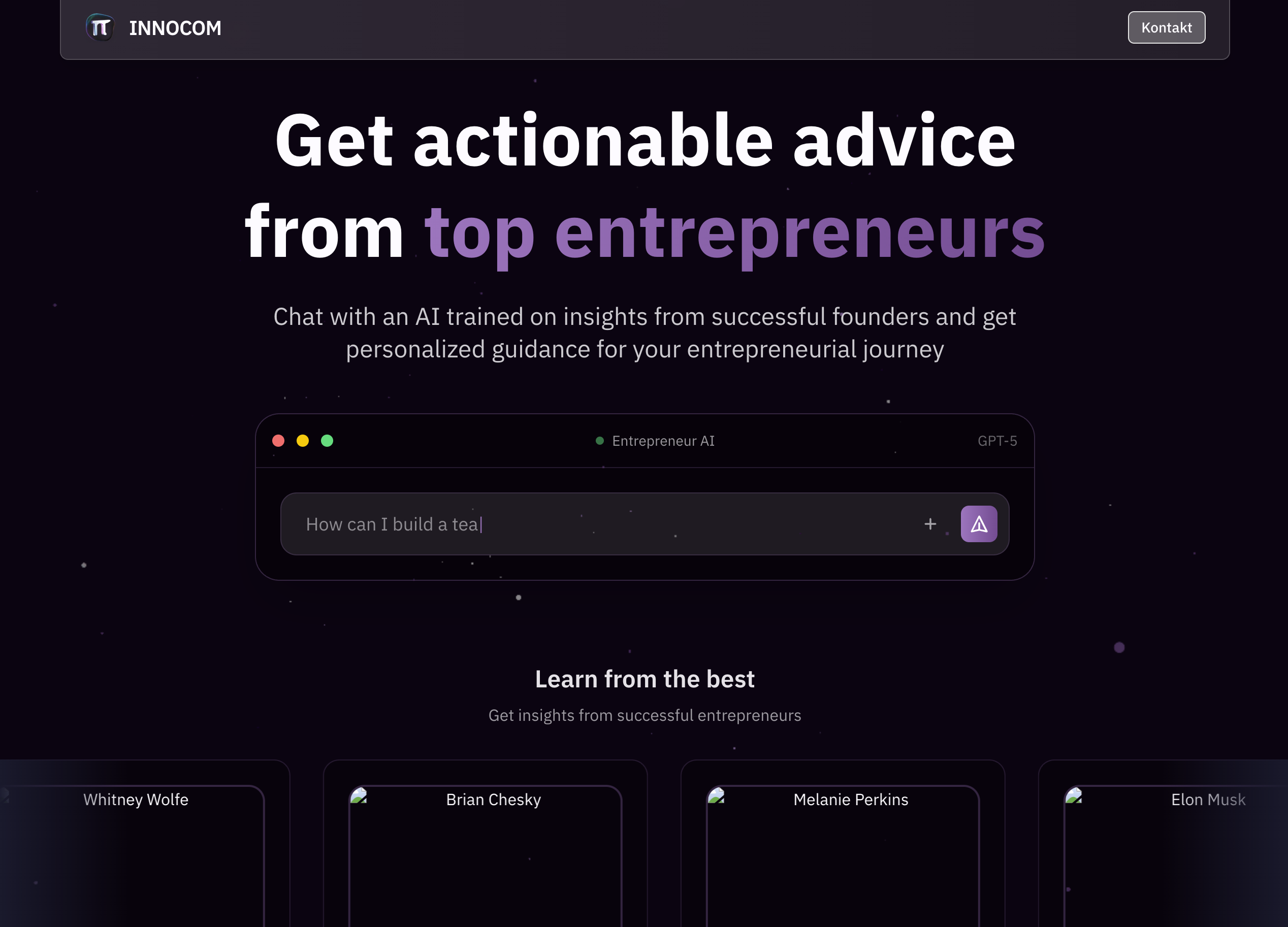
InnoCom evolved similarly. Started as a simple networking PWA for Frankfurt School's IdeaLab event (700 attendees). Then I realized students couldn't form meaningful connections even with high engagement. So we built AI "Friends" that collect deep profile data through natural conversation and facilitate warm introductions between compatible co-founders. Like series.so but for entrepreneurs.
The pattern? I didn't wait for the perfect idea. I found painful problems and started solving them.
ViralPoint hit €125k revenue in year one not because I had some revolutionary marketing framework, but because I delivered €15 ROAS for clients through content marketing and lead generation. Simple, proven tactics executed well.
Most young entrepreneurs waste months trying to find their "unicorn idea." Meanwhile, there are profitable problems everywhere. Someone needs their marketing fixed. Another person needs custom software. A third needs operations streamlined.
Start with the problem in front of you. The big vision comes later.
Myth #4: "You Need to Choose One Thing"
The Reality: Being multi-talented is your edge if you manage it right.
"Pick one thing and focus" is great advice. For people who aren't young anymore.
When you're 23 with energy to spare, running multiple ventures isn't spreading yourself thin. It's de-risking your portfolio and learning faster than everyone else.
FastPal makes me better at Cardea because I learn about network effects in both. InnoCom teaches me about platform dynamics that apply to my other products. ViralPoint clients become beta testers for my software tools.
But here's the key: I'm not doing everything myself. FastPal has a co-founder. InnoCom is an advisory role. Cardea is my personal project. ViralPoint runs on systems I built.
The mistake young entrepreneurs make isn't pursuing multiple things. It's trying to be the bottleneck in all of them.
I'm CTO at FastPal, which means I own the technical vision but Moritz owns sales and operations. At InnoCom, I advise but don't execute day-to-day. ViralPoint was built with systems so it doesn't need me constantly.
Multi-talented doesn't mean multi-tasking. It means strategic positioning across complementary projects that compound your skills and network.
Myth #5: "Work-Life Balance is Essential"
The Reality: Some seasons require sacrifice, and that's okay.
This one's controversial, I know. But let me be direct: "work-life balance" often masks laziness when you're building something meaningful in your early twenties.
My dad worked 80-hour weeks building his restaurant empire. People probably told him to "slow down" and "spend time with family." Then he had a brain hemorrhage at 45 and lost everything he built. You know what I learned? Time isn't unlimited. Neither is energy. Neither is opportunity.
So when people my age talk about work-life balance, I think about my dad in that hospital bed with a tear rolling down his cheek while in a coma. Because he heard me say he'd never see me win our bet (he challenged me to make €2,000/month, I wanted to prove him wrong).
That moment taught me: if you're going to work hard, make it count. Make it matter. Don't waste your twenties on comfortable mediocrity.
But here's the nuance everyone misses: I'm not saying work yourself to death. I'm saying pick your season. Right now, I'm in building season. Later, I'll be in freedom season. Most people want freedom season without building season. That's not how it works.
I train BJJ regularly. I have a partner. I read. I play chess. I'm not some soulless workaholic. But when FastPal needs me until 2 AM before a demo, I'm there. When a client emergency hits, I handle it. When my team needs leadership, I show up.
The difference between balance and sacrifice is intentionality. I'm intentionally sacrificing comfortable leisure now for generational wealth later. I'm clear about why. Most people aren't.
Myth #6: "You Need Funding to Start"
The Reality: Constraints breed creativity, and bootstrapping builds better businesses.
Every single one of my ventures started bootstrapped. ViralPoint was client-funded from day one (I used early client payments to fund operations). FastPal was built with our own money while I coded nights and weekends. InnoCom started as a side project using free tools.
Here's what funding actually does: it lets you outsource problems instead of solving them creatively. Need developers? Hire them. Need marketing? Hire an agency. Need office space? Get a WeWork.
When you bootstrap, you learn. I learned to code because I couldn't afford developers. I learned marketing because I couldn't afford agencies. I learned sales because I had to close deals to pay rent.
Those skills compound. Now I'm CTO-level technical, execute marketing at scale, and can close enterprise deals. That wouldn't have happened if I'd raised a seed round at 20 and hired specialists.
Plus, bootstrapping forces you to find revenue fast. You can't burn investor money for three years "finding product-market fit." You need paying customers now. That's a feature, not a bug. It validates you're solving a real problem.
Will I raise funding eventually? Maybe for FastPal if we want to scale fast. But only after we've proven the model bootstrapped. Investors respect entrepreneurs who can build without them.
Myth #7: "Failure Means You Should Quit"
The Reality: Failure is data, and young entrepreneurs can afford to fail.
My first business idea was called Deepslate. Personal productivity and goal management via WhatsApp. Built the whole thing. Integrated AI. Created a 3-goal framework. Automated scheduling.
Nobody paid for it.
Why? Because I built what I thought was cool, not what people needed. I didn't validate the problem first. I assumed because I wanted it, others would too.
That failure taught me more than my entire Business Administration degree. It taught me to talk to customers before building. To validate problems before solutions. To charge money early to test real commitment.
Now with FastPal, we're doing it right. We talked to 50+ sales teams before writing a line of code. We validated the pain (closing online meetings sucks). We built an MVP. We're charging from day one.
That only happened because Deepslate failed.
Here's the truth about being a young entrepreneur: you can fail three times and still be younger than most people starting their first business. That's an insane advantage. Use it.
Fail fast. Learn faster. Apply lessons to the next thing. Older entrepreneurs can't afford to do this. They have mortgages, kids, reputations to protect. You have nothing to lose except time, and you have more of that than they do.
What Actually Matters (The Stuff Nobody Mentions)
After six years of building businesses, here's what I wish someone had told me:
1. Network compounds faster than skill. The people you meet at 20 become the partners, customers, and investors at 25. I'm advising at Frankfurt School now partly because I built relationships there as a student. Those connections are worth more than any course I took.
2. Loyalty is rare and valuable. When my mentor suggested dropping Moritz due to productivity data, choosing loyalty over efficiency seemed irrational. But long-term, having a co-founder who knows I have his back is worth more than short-term productivity gains. People remember who stuck with them.
3. Your mission matters more than your metrics. I exist to help myself, my environment, and my nearest and dearest exceed their limits and lead a free life. That's why I build. Revenue is a scorecard, not the goal. When you're clear on mission, decisions get easier.
4. Family first isn't weakness, it's strength. Becoming the provider at 17 gave me purpose. It's not about ego or proving myself. It's about making sure my family never worries about money. That motivation is stronger than any "I want to be rich" goal because it's about something bigger than me.
5. Document everything. I'm building my blog (jacksonly.xyz) not just for brand authority but because I want to remember this journey. Ten years from now, I'll read these posts and remember what it felt like to be 23, scared, excited, and building multiple companies simultaneously. That's valuable.
So Should You Become a Young Entrepreneur?
Honestly? Only if you have to.
If you can be satisfied with a comfortable job, good salary, and normal career progression, do that. It's easier. It's safer. It's fine.
But if you're like me if something inside you won't let you settle, if you see problems everywhere and can't stop thinking about solutions, if you feel responsible for something bigger than yourself then yeah, you should build.
Just know what you're signing up for:
Long hours. Uncertainty. Watching friends party while you debug code. Explaining to dates why you can't travel right now. Checking your bank account before dinner. Wondering if you're crazy. Getting called a dreamer (and not in a complimentary way).
But also: Freedom. Impact. Learning faster than anyone else. Building something meaningful. Helping others exceed limits. Creating generational wealth. Proving that sacrifice now means freedom later.
I turned 23 in 2025. My dad recovered enough to see me hit €10,000/month (we bet on €2,000). I'm building tools that help people close more deals, manage better networks, and connect authentically. I'm learning, failing, and growing faster than I ever could in a corporate job.
Is it worth it? For me, absolutely. For you? Only you can answer that.
But if you decide to do this, remember: being young isn't your weakness. It's your unfair advantage. Use it while you have it.
What's your biggest fear about starting young? Drop a mail and let's talk about it. And if this resonated, share it with another young entrepreneur who needs to hear it.
About Jackson Ly: 23-year-old multi-entrepreneur based in Frankfurt, Germany. CTO & Co-founder of FastPal (AI sales supervisor). Building Cardea, InnoCom, and more. Frankfurt School graduate, advisor, and someone who chose sacrifice over comfort. Connect on X/Twitter.